
 Save
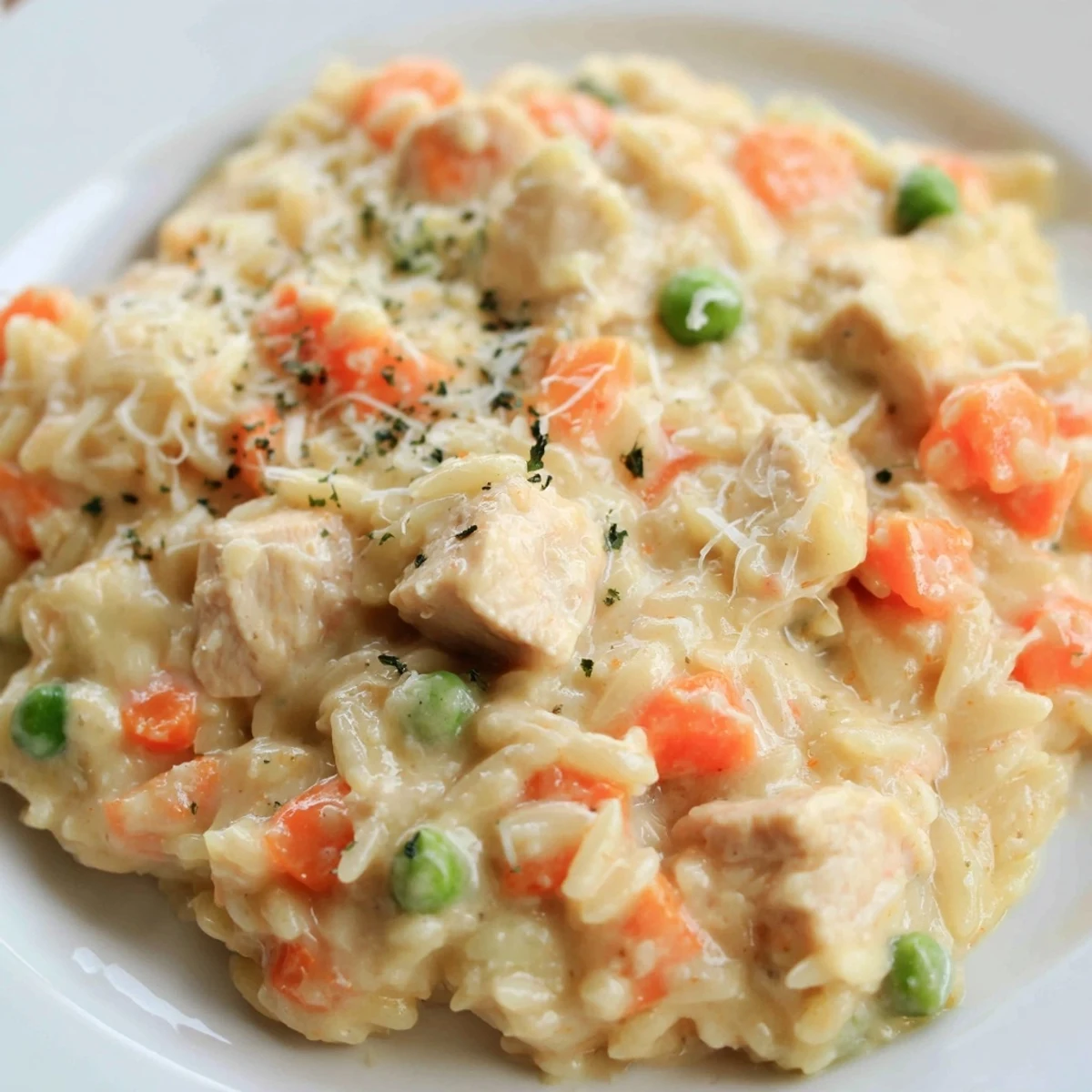
Save This creamy chicken pot pie orzo transforms all the comforting flavors of traditional chicken pot pie into an easy one-pot meal. Tender diced chicken, aromatic vegetables, and orzo pasta simmer together in a rich, velvety sauce thickened with a simple roux and finished with heavy cream and Parmesan cheese.
Ready in just 45 minutes with minimal prep, it's perfect for busy weeknights when you crave something warm and satisfying. The orzo absorbs the savory chicken broth beautifully, creating a luscious texture that coats every bite.
The rain was hammering against the kitchen window so hard that Tuesday evening that I abandoned all plans for grilling and started rifling through the pantry for something that would warm us from the inside. Orzo caught my eye, a half used bag sitting next to some forgotten lentils, and suddenly all I could think about was chicken pot pie but without the fuss of rolling out dough. Forty five minutes later my husband was scraping his bowl clean and asking if I had secretly ordered takeout. That bowl of creamy, golden orzo with tender chicken and vegetables tucked into every spoonful became our unofficial storm season tradition.
I made this for my sister the week she moved into her first apartment, balancing the pot on a tiny two burner stove while boxes towered around us like cardboard walls. She sat cross legged on the bare floor with a bowl in her lap and declared it the best housewarming gift she had ever received, and now she texts me every time she makes it with her own little twist.
Ingredients
- 400 g boneless skinless chicken breast or thighs, diced: Thighs stay juicier but breast works beautifully if that is what you have on hand.
- 1 medium onion, diced: The sweetness builds a foundation that you will notice if you skip it.
- 2 medium carrots, peeled and diced: Cut them small so they soften at the same rate as everything else.
- 2 celery stalks, diced: Celery adds a quiet earthiness that balances the richness of the cream.
- 1 cup frozen peas: Add them near the end so they keep their bright color and gentle pop.
- 1 1/4 cups orzo pasta: Toast it briefly in the pot for a nuttier depth if you have an extra minute.
- 2 tbsp unsalted butter: This is the flavor base that makes the vegetables sing.
- 1/2 cup heavy cream: You can lighten it with half and half but the cream gives that velvety pot pie texture.
- 1/2 cup grated Parmesan cheese: Freshly grated melts in smoothly and adds a salty finish.
- 3 cups low sodium chicken broth: Low sodium lets you control the salt level from start to finish.
- 2 tbsp all purpose flour: This tiny amount thickens the broth into something that coats the back of a spoon.
- 2 tbsp olive oil: Used for searing the chicken to a golden brown.
- 1 tsp garlic powder: Distributes garlic flavor evenly without burning like fresh minced garlic can.
- 1/2 tsp dried thyme: Thyme is the herb that makes it taste like pot pie and not just chicken soup.
- 1/2 tsp dried parsley: A quiet background note that brightens the whole pot.
- Salt and pepper: Season in layers, a little at each stage, for the most rounded flavor.
Instructions
- Brown the chicken:
- Heat olive oil in a large pot or deep skillet over medium high heat, add the diced chicken seasoned with salt and pepper, and cook until golden on the outside and fully cooked through, about 5 to 6 minutes. Transfer the chicken to a plate and let it rest while you build the base.
- Soften the vegetables:
- Add butter to the same pot and let it melt until it starts to foam, then toss in the onion, carrots, and celery. Stir occasionally and cook until the vegetables are tender and fragrant, about 5 minutes, scraping up any golden bits left from the chicken.
- Build the roux:
- Sprinkle the flour over the softened vegetables and stir constantly for about 1 minute. You want the flour to cook off its raw taste and coat every piece of vegetable in a light dusting.
- Add the broth:
- Pour in the chicken broth gradually while stirring so the flour dissolves smoothly without forming lumps. Bring everything to a gentle simmer and watch it transform into a silky, aromatic liquid.
- Cook the orzo:
- Stir in the orzo, garlic powder, thyme, and parsley, then reduce the heat to medium low. Let it cook uncovered, stirring every few minutes so the orzo does not stick, until it is tender but still has a slight bite, about 10 minutes.
- Bring it all together:
- Return the cooked chicken to the pot along with the frozen peas and simmer for 3 more minutes. The peas will thaw quickly and the chicken will warm through without overcooking.
- Finish with cream and cheese:
- Stir in the heavy cream and Parmesan, watching the broth turn thick and luxurious as the cheese melts. Taste and adjust the salt and pepper before serving hot with an extra sprinkle of parsley or Parmesan on top.
 Save
Save There is something about ladling this into bowls on a cold evening that makes everyone at the table go quiet for a minute, spoons moving in unison, which is the highest compliment a home cook can receive.
Smart Swaps and Variations
Rotisserie chicken from the grocery store is a weeknight shortcut that works wonders here, just shred it and add it in step six. You can also toss in a handful of sliced mushrooms or corn kernels with the vegetables for extra sweetness and texture. A friend of mine swears by adding a splash of white wine after the roux step, and honestly it adds a lovely brightness.
What to Serve Alongside
This dish is a complete meal on its own but a simple green salad with a tangy vinaigrette cuts through the richness beautifully. Crusty bread on the side is never a bad idea for soaking up every last bit of the creamy sauce. A glass of Chardonnay or even a cold apple cider pairs surprisingly well with the herby, savory flavors.
Storing and Reheating
Leftovers keep well in an airtight container in the refrigerator for up to three days, though the orzo will soak up the sauce and thicken considerably. Reheat gently on the stove with a splash of chicken broth or water, stirring until it loosens back into that creamy consistency. Freezing is not ideal because the cream and orzo texture changes once thawed, so enjoy it fresh if you can.
- Label your container with the date so you remember when you made it.
- Avoid microwaving on high power because the cream can separate.
- Make only what you plan to eat within a couple of days for the best texture.
 Save
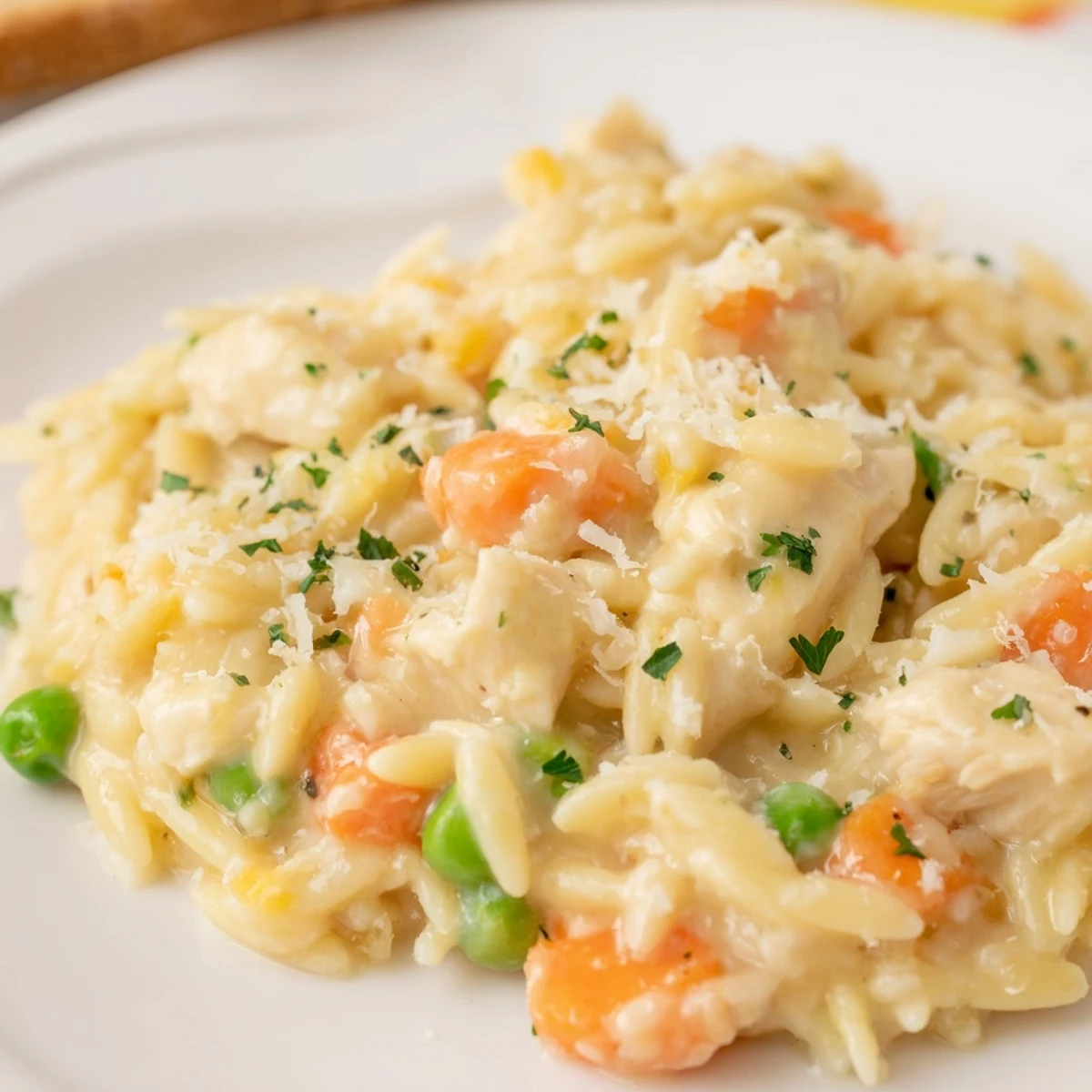
Save This is the kind of recipe that makes your kitchen smell like home and brings everyone to the table without being called twice. Keep it in your back pocket for any night that needs a little extra comfort.
Your Recipe Questions Answered
- → Can I use rotisserie chicken instead of raw chicken?
-
Yes, rotisserie chicken works perfectly and cuts down on prep time. Simply shred or dice about 2 cups of cooked rotisserie chicken and add it in step 6 along with the frozen peas, skipping the initial chicken cooking step.
- → What can I substitute for heavy cream?
-
For a lighter version, you can use half-and-half or whole milk instead of heavy cream. Keep in mind the sauce will be slightly less thick and rich. You can also add an extra tablespoon of flour to the roux to help thicken it.
- → How do I store and reheat leftovers?
-
Store leftovers in an airtight container in the refrigerator for up to 3 days. When reheating, add a splash of chicken broth or water to loosen the sauce, as the orzo will absorb liquid as it sits. Reheat gently on the stovetop or in the microwave.
- → Can I add other vegetables to this dish?
-
Absolutely. Mushrooms, corn, green beans, or diced potatoes all work well. Add heartier vegetables like potatoes at the same time as the orzo, and quicker-cooking ones like spinach at the end with the cream.
- → Is there a gluten-free version of this dish?
-
You can make it gluten-free by using gluten-free orzo pasta and replacing the all-purpose flour with a gluten-free flour blend or cornstarch slurry. Use 1 tablespoon of cornstarch mixed with 2 tablespoons of cold water added during the simmering step.
- → What wine pairs well with creamy chicken orzo?
-
A crisp white wine like Chardonnay complements the creamy sauce beautifully. If you prefer red, a light Pinot Noir also works well. The buttery, rich flavors of the dish pair nicely with wines that have good acidity to balance the richness.