
 Save
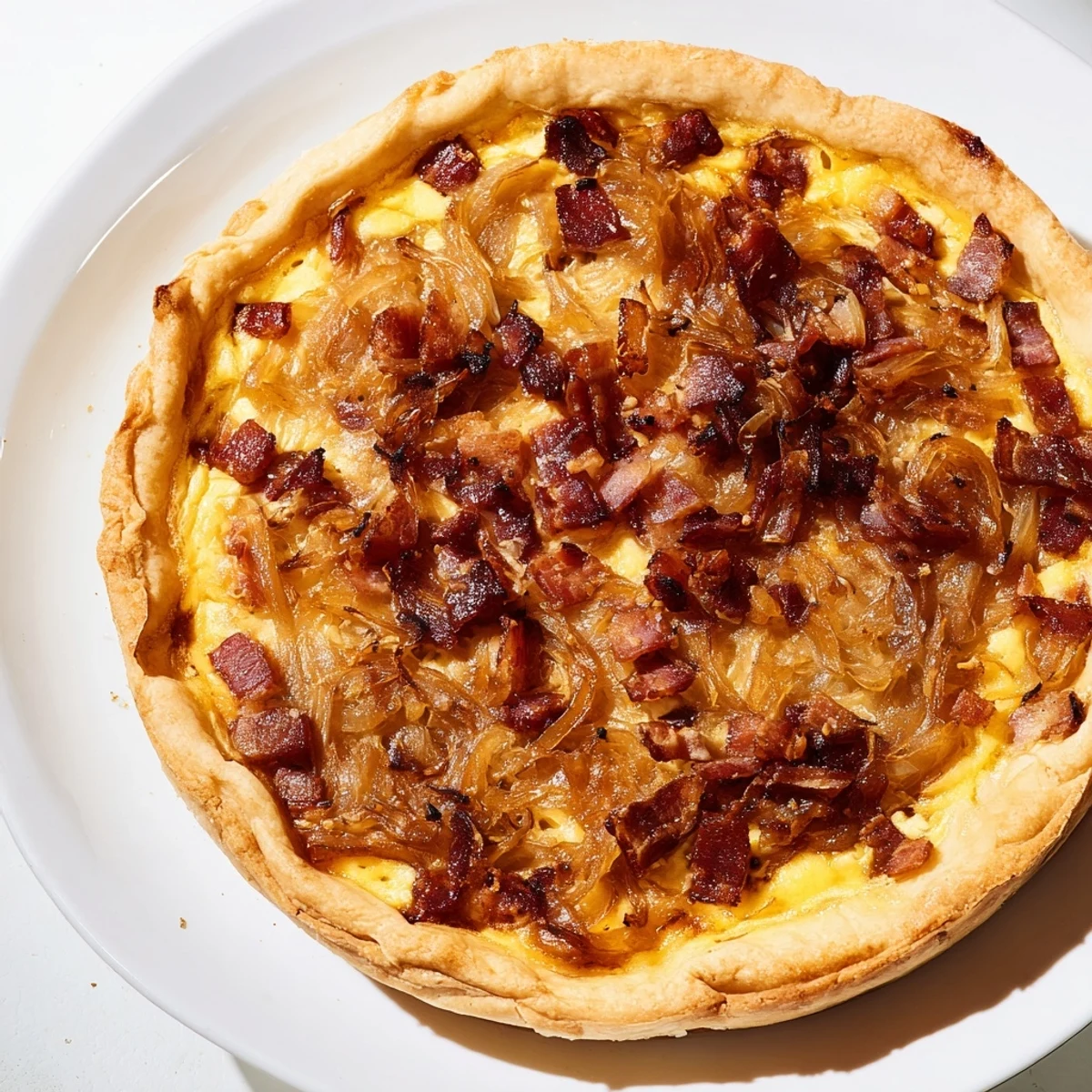
Save This traditional German savory tart combines layers of sweet, slowly caramelized onions with smoky bacon pieces, all baked in a rich, creamy custard made with heavy cream, whole milk, eggs, and nutmeg. The golden filling rests on a homemade buttery pastry crust that bakes until perfectly crisp. Ideal for autumn evenings, Oktoberfest festivities, or as a hearty main dish served alongside fresh green salad or tangy sauerkraut and a chilled glass of Riesling.
The first time I encountered Zwiebelkuchen was at a muddy Oktoberfest in Stuttgart, where steam rose from paper plates carrying these golden squares through the autumn chill. My German friend's grandmother had made hers with onions so sweet they tasted like candy, balanced by the bite of smoky bacon. That evening taught me that humble ingredients, treated with patience, create something extraordinary. I've been making this tart ever since, adapting it until the onions caramelize just right.
Last autumn, I made this for a dinner party when the rain wouldn't stop, and the kitchen filled with such incredible aromas that guests kept drifting in to watch the onions turn golden. We ended up eating standing up around the counter, wine glasses in hand, while the tart was still too hot to cut properly. Nobody cared about the burns.
Ingredients
- 2 cups all-purpose flour: Forms the tender, crisp foundation that holds everything together without getting soggy
- 1/2 teaspoon salt: Enhances flavor in both crust and filling without overpowering the delicate sweetness
- 1/2 cup cold unsalted butter: Creating those flaky layers requires keeping this butter ice-cold until it hits the oven
- 1 large egg: Binds the pastry dough while adding richness and structure
- 2-3 tablespoons cold water: Just enough to bring the dough together, added slowly until the perfect texture forms
- 2 tablespoons unsalted butter: The cooking fat that helps onions break down and develop their signature sweetness
- 1 lb yellow onions: The star of the show, thinly sliced so they melt into caramelized perfection
- 5 oz thick-cut bacon: Provides smoky contrast and savory depth that balances the onion sweetness
- 1/2 teaspoon caraway seeds: An optional but traditional German addition that adds subtle earthy notes
- 1 teaspoon salt and 1/2 teaspoon black pepper: Essential seasoning to lift all the flavors and create balance
- 1/4 teaspoon freshly grated nutmeg: A classic German baking spice that adds warmth without making it taste like dessert
- 1 cup heavy cream: Creates the silky, luxurious custard that holds the pie together
- 1/2 cup whole milk: Lightens the custard slightly while maintaining its creamy texture
- 3 large eggs: The structure builders that set the filling into that perfect quiver when sliced
- 1/2 cup grated Emmental or Gruyère cheese: Adds nutty, melty pockets throughout the custard
Instructions
- Make the pastry dough:
- Combine flour and salt in a large bowl, then cut in cold butter until the mixture looks like coarse crumbs with some pea-sized pieces remaining. Add the egg and just enough cold water to bring it together, then shape into a disk, wrap tightly, and let it rest in the refrigerator for 30 minutes while you prepare the filling.
- Prepare the crust:
- Preheat your oven to 375°F and roll out the chilled dough on a floured surface until it's large enough to fit a 9-inch tart or pie pan. Press it gently into the pan, trim any overhanging edges, and prick the base all over with a fork before returning it to the fridge.
- Caramelize the onions:
- Melt butter in a large skillet over medium heat, cook the bacon until just crisp, then remove it and set aside. Add the sliced onions to the rendered fat and cook them slowly for 15 to 20 minutes, stirring often, until they're golden, soft, and smelling incredible. Stir in caraway seeds if using, plus salt, pepper, and nutmeg, then fold in the cooked bacon.
- Whisk the custard:
- In a medium bowl, combine the heavy cream, whole milk, eggs, and grated cheese, whisking until completely smooth and slightly frothy.
- Assemble and bake:
- Spread the onion mixture evenly across the prepared crust, pour the custard over the top, and bake for 40 to 45 minutes until the filling is set and golden brown on top. Let it cool for at least 10 minutes before slicing into wedges.
 Save
Save My neighbor caught the aroma through an open window last week and knocked on my door with a bottle of Riesling, asking what smelled like heaven. We ate this tart on her back porch watching the leaves fall, and she said it reminded her of her grandmother's kitchen in Munich.
Make It Vegetarian
Simply omit the bacon or replace it with smoked tofu cubes for that savory depth. The onions carry so much flavor on their own that you won't miss the meat, especially if you increase the cheese slightly or add a handful of fresh thyme.
Pairing Suggestions
A crisp German white wine like Riesling cuts through the richness beautifully, or try a dry Gewürztraminer if you prefer something more aromatic. For non-drinkers, a chilled apple cider with a splash of sparkling water works surprisingly well alongside the sweet and savory flavors.
Serving Ideas
A simple green salad with vinaigrette helps balance the richness, or serve it alongside some sauerkraut for a truly authentic German experience. This tart works beautifully for brunch, lunch, or a light dinner with friends.
- Let it cool for at least 15 minutes before slicing to ensure clean cuts
- Room temperature is when the flavors really shine, so don't rush to serve it piping hot
- Leftovers reheat surprisingly well in a low oven the next day
 Save
Save There's something deeply satisfying about a dish that transforms the most ordinary ingredients into something extraordinary. I hope this German onion pie finds its way into your autumn traditions.
Your Recipe Questions Answered
- → What makes German onion pie different from other onion tarts?
-
The traditional version features a custard base with cream, eggs, and spices like nutmeg and caraway seeds, while the onions are slowly caramelized until sweet and golden. The combination of smoky bacon and creamy custard creates a distinctly German flavor profile that's richer than French tarte à l'oignon.
- → Can I make this vegetarian?
-
Absolutely. Simply omit the bacon or replace it with smoked tofu cubes, mushrooms, or additional cheese for a savory umami element. The onions and spices provide plenty of flavor on their own.
- → How do I know when the custard is set?
-
The filling should be set around the edges but still have a slight wiggle in the center when gently shaken. The top will be golden brown, and a knife inserted near the center should come out mostly clean with moist crumbs attached.
- → Can I prepare this ahead of time?
-
Yes. You can make the pastry dough and caramelize the onions up to 2 days in advance. Store them separately in the refrigerator. Assemble and bake just before serving for the best texture. Leftovers reheat beautifully in a 350°F oven.
- → What's the best way to slice and serve?
-
Allow the tart to cool for at least 10-15 minutes after baking before slicing. This helps the custard set completely. Use a sharp knife and wipe it clean between cuts for neat slices. Serve warm or at room temperature.
- → What wine pairs well with this dish?
-
A crisp German Riesling, dry Gewürztraminer, or Federweißer (new wine) cuts through the richness beautifully. For non-alcoholic options, try sparkling apple cider or a light German-style lager.