
 Save
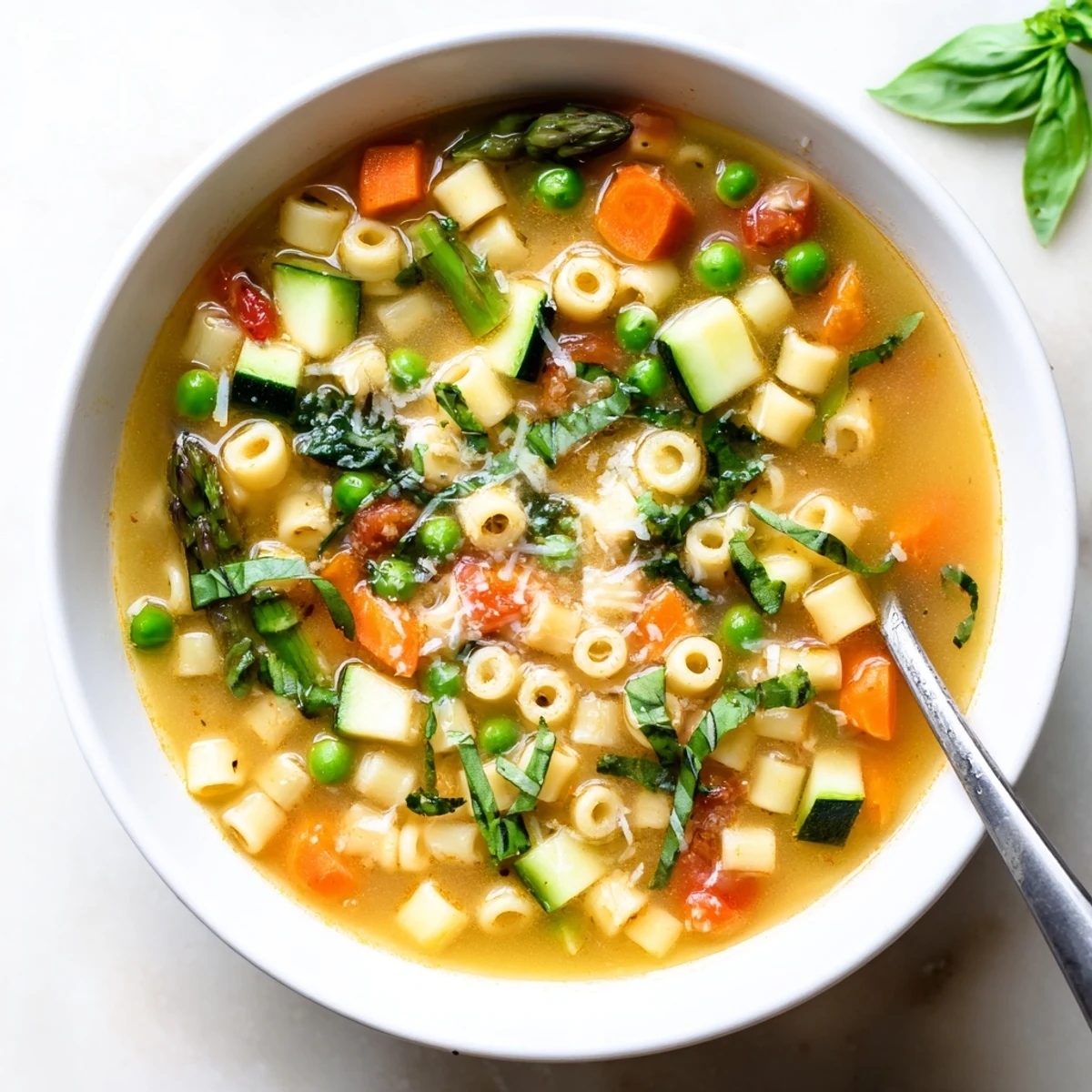
Save This vibrant spring minestrone combines the best of seasonal vegetables including asparagus, peas, zucchini, and tender baby spinach with small pasta in a flavorful vegetable broth. The aromatic base of sautéed leeks and garlic builds depth, while fresh herbs and a splash of lemon juice brighten each bowl. Perfect for those cooler spring evenings when you want something nourishing but not heavy.
The soup comes together in just 45 minutes with simple preparation—sauté the aromatics and vegetables, simmer with broth and tomatoes until the pasta is perfectly al dente, then finish with fresh herbs and spinach. The result is a comforting, vegetarian bowl that celebrates the fresh produce of the season while delivering that classic minestrone satisfaction.
The first day spring actually felt like spring, I found myself at the farmers market staring at bunches of asparagus and fresh peas still in their pods. Everything looked impossibly green after months of root vegetables. I bought more than I needed and came home determined to make something that tasted exactly like that moment.
Last April my sister came over for dinner exhausted from a new job. I set this soup on the table with some crusty bread and she took three bites before looking up and actually smiling for the first time all evening. Sometimes food does more than feed people.
Ingredients
- Olive oil: A good foundation for sautéing the vegetables into sweetness.
- Leek: Milder than onion and gives this soup its gentle aromatic base, use the white and light green parts only.
- Garlic cloves: Minced fresh adds immediate fragrance.
- Carrots: Diced small they cook through quickly and add natural sweetness.
- Zucchini: Cut into similar sized pieces so everything cooks evenly.
- Asparagus: Trim woody ends and cut into bite sized lengths.
- Fresh or frozen peas: These are the stars of the show.
- Baby spinach: Added at the very end it wilts into ribbons.
- Vegetable broth: Low sodium lets you control the seasoning.
- Canned diced tomatoes: Drain them first to keep the soup vibrant and not too acidic.
- Small pasta: Ditalini or small shells catch the broth in every spoonful.
- Dried thyme and basil: These bloom in the hot oil and release their oils.
- Salt and pepper: Season at the end since broth salt levels vary.
- Fresh parsley and basil: Sprinkle them in right before serving.
- Lemon juice: This bright element makes all the spring flavors pop.
- Grated Parmesan and extra olive oil: The finish that makes it feel like a proper meal.
Instructions
- Sauté the foundation:
- Warm olive oil in your largest soup pot over medium heat. Add the sliced leek and cook stirring occasionally for about 3 minutes until it starts to soften.
- Add aromatics and hard vegetables:
- Stir in the garlic for just a minute until fragrant then add the diced carrots. Let them cook for 2 minutes to take the raw edge off.
- Add tender spring vegetables:
- Toss in the zucchini asparagus pieces and peas. Cook everything together for another 2 minutes.
- Build the broth:
- Pour in the vegetable broth and the drained diced tomatoes. Turn up the heat until you see a gentle bubble break the surface.
- Cook the pasta:
- Add the pasta dried thyme and dried basil. Lower the heat to maintain a simmer and cook uncovered for 8 to 10 minutes until the pasta is al dente.
- Finish with fresh greens:
- Stir in the baby spinach fresh parsley fresh basil and lemon juice. Cook for just 1 to 2 minutes until the spinach collapses into the soup.
- Season and serve:
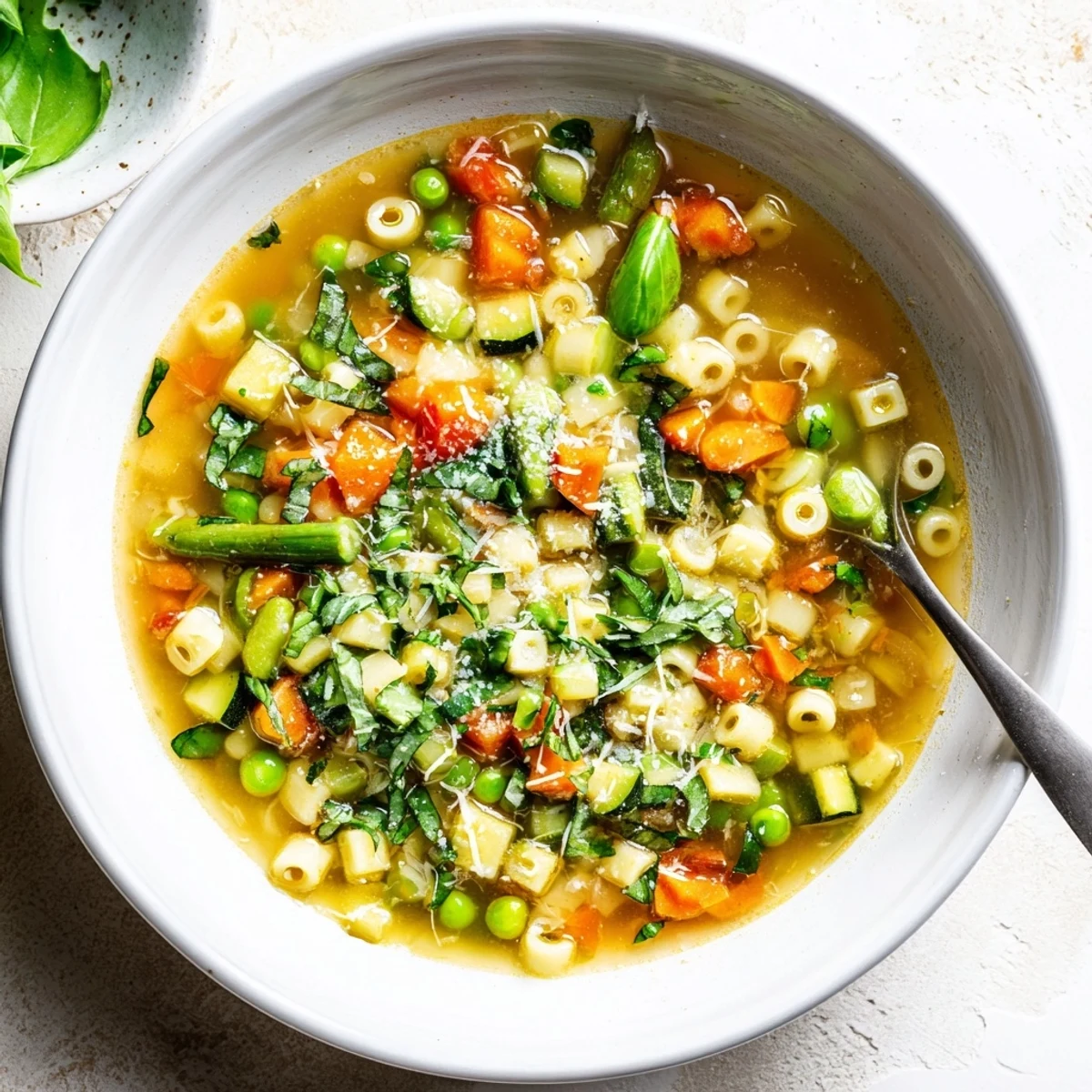
- Taste and add salt and pepper as needed. Ladle into bowls and finish with grated Parmesan and a drizzle of your best olive oil.
 Save
Save Now I make this soup every time the weather turns warm again. It has become the way I mark the season in my kitchen.
Seasonal Swaps
The beauty of this recipe is its adaptability to whatever the farmers market offers. Green beans fava beans fresh artichoke hearts or even tender spring onions can all find their way into the pot. Just keep the pieces similar in size so everything finishes cooking at the same time.
Make It Yours
Sometimes I add a handful of cubed russet potatoes if I want something more hearty. Other times I finish it with a scoop of pesto stirred into each bowl instead of grated cheese. The soup never complains about variations.
Serving Ideas
This soup wants to be eaten with something crisp and salty alongside. A hunk of toasted sourdough or some focaccia rubbed with raw garlic turns it into a proper meal. I also like to set out a small bowl of shaved pecorino for anyone who wants an extra salty kick.
- Crisp white wine cuts through the broth beautifully.
- A simple arugula salad with lemon vinaigrette on the side.
- Rustic bread is practically mandatory.
 Save
Save Spring waits for no one and neither should this soup. Make it while the vegetables are still sweet and the air still has that fresh possibility.
Your Recipe Questions Answered
- → Can I make this soup gluten-free?
-
Yes, simply substitute the regular pasta with your favorite gluten-free pasta shape. The cooking time may vary slightly, so check the package instructions and adjust accordingly.
- → How do I store leftovers?
-
Store cooled soup in an airtight container in the refrigerator for up to 3 days. The pasta will absorb some broth, so add extra vegetable broth when reheating to reach your desired consistency.
- → Can I freeze spring minestrone?
-
For best results, freeze the soup without the pasta. Cook the pasta separately when serving and combine with the reheated soup. If freezing with pasta, it may become slightly mushy.
- → What vegetables can I substitute?
-
Feel free to swap in other spring vegetables like green beans, fava beans, or artichoke hearts. The beauty of minestrone is its versatility—use what looks fresh and seasonal at your market.
- → Is this soup vegan?
-
The soup is naturally vegan if you omit the Parmesan cheese garnish or use a plant-based Parmesan alternative. The base contains only vegetables, olive oil, and seasonings.
- → Can I use dried herbs instead of fresh?
-
Dried thyme and basil are already included in the cooking process. For the finishing herbs, use about 1 teaspoon of dried parsley and basil in place of fresh, adding them earlier during simmering.