
 Save
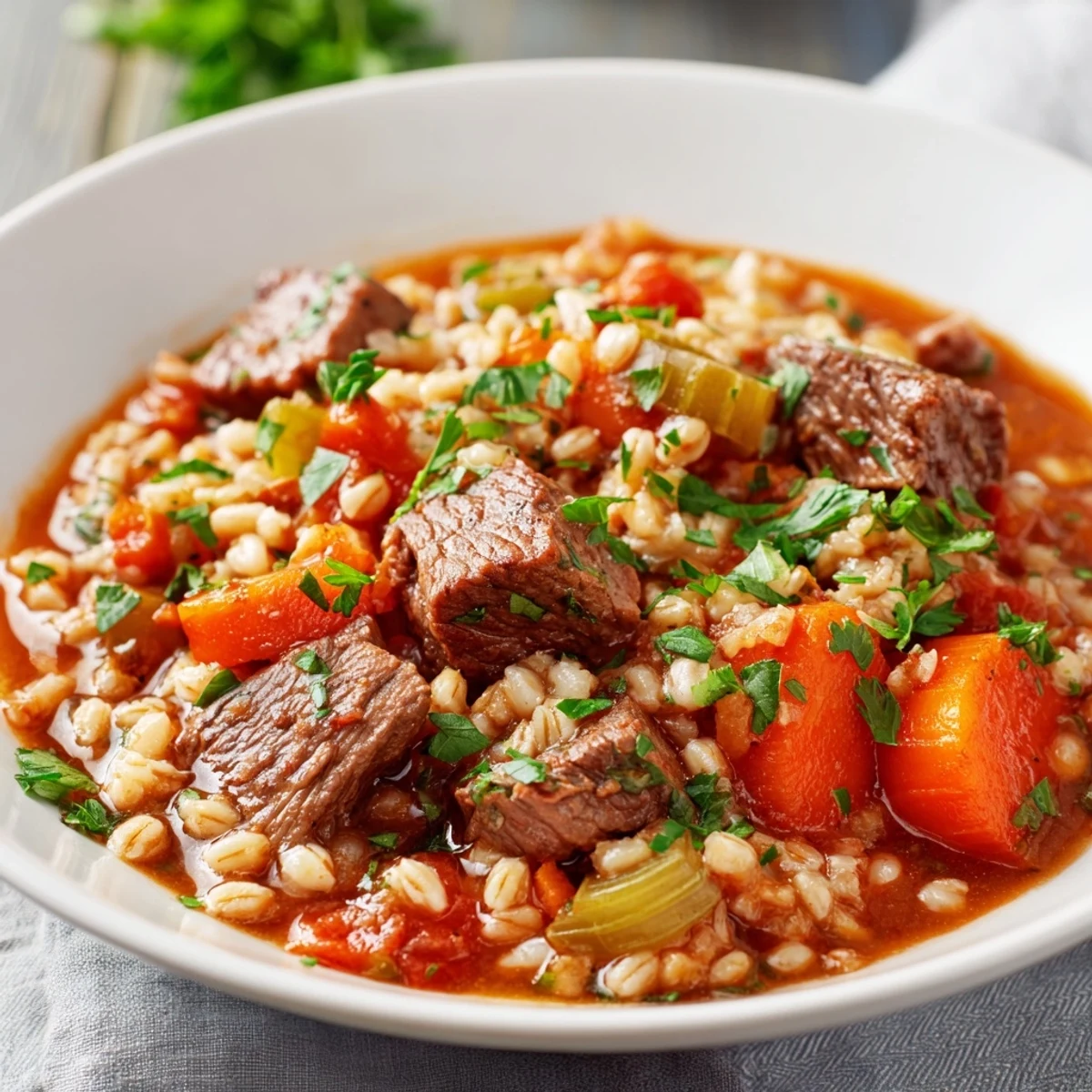
Save This hearty stew combines tender beef cubes with nutty pearl barley, sweet carrots, and celery in a rich broth infused with herbs like thyme and rosemary. Slowly simmered for two hours, the dish develops deep, comforting flavors perfect for cold evenings. The addition of garlic, diced tomatoes, and optional parsley garnish enhances its savory profile. Ideal for a wholesome, warming main course to share.
There's something about a pot of beef and barley stew that transforms a cold afternoon. I discovered this recipe during a particularly gray November when my neighbor stopped by with fresh vegetables from her garden and asked if I knew what to do with them all. What started as a practical question became one of those meals I now make whenever the temperature drops and the light fades early.
My daughter came home from school once and walked straight to the stove when she smelled this cooking, before even putting down her backpack. She wanted to know when it would be ready, and I realized it wasn't just the food—it was the promise of sitting down together without rushing. That's when I started doubling the recipe.
Ingredients
- Beef chuck, 2 lbs cut into 1-inch cubes: Chuck has just enough marbling to stay tender during the long simmer without drying out, and the fat renders into the broth to build flavor.
- Olive oil, 2 tablespoons: High heat is your friend here—you need it hot enough to actually sear the meat and develop that golden crust.
- Onion, 1 large chopped: It breaks down almost completely, thickening the broth naturally while adding sweetness as it caramelizes.
- Carrots, 3 large peeled and sliced: They soften into that perfect texture where they're still distinct but practically melt on your tongue.
- Celery stalks, 3 sliced: Don't skip this—it's the quiet backbone that makes the whole stew taste more complex than it actually is.
- Garlic, 3 cloves minced: Add it after the other vegetables soften so it doesn't burn, and you'll get that sweet, mellow garlic flavor instead of sharp heat.
- Diced tomatoes, 1 can (14 oz): They add acidity that brightens all the deep, heavy flavors building in the pot.
- Pearl barley, 3/4 cup rinsed: Rinsing removes the starch that would make the broth cloudy, and it cooks faster than hulled varieties while still keeping a bit of texture.
- Beef broth, 6 cups: Use real broth if you can—the depth makes a surprising difference by hour two.
- Water, 1 cup: It dilutes the salt just enough so the broth doesn't become overwhelming as it reduces.
- Bay leaves, 2: They disappear into the background but create an herbal undertone you'll notice if they're missing.
- Dried thyme and rosemary, 1 teaspoon each: Dried herbs actually work better here than fresh because they blend completely into the broth instead of floating around.
- Black pepper and kosher salt, 1/2 teaspoon and 1 1/2 teaspoons: Taste as you go near the end—the broth intensifies as it reduces.
- Fresh parsley, 2 tablespoons chopped (optional): It's not essential, but a scatter of green brightens the bowl and reminds you this came from actual plants.
Instructions
- Get your pot hot and ready:
- Place your Dutch oven on medium-high heat with the olive oil and let it shimmer until it's almost smoking—you want it ready to sear aggressively. A cold pan is the enemy of a good crust.
- Sear the beef in batches:
- Don't crowd the pot or the meat will steam instead of brown. Listen for the aggressive sizzle and don't move it around; let each side sit for a minute or two until it's deeply golden. You're building the flavor base right here.
- Build your flavor foundation:
- Once the beef is out, lower the heat to medium and add the onion, carrots, and celery to the same pot where all those browned bits are stuck. They'll soften in about five minutes, and you'll start to see the foundation forming.
- Wake up the garlic:
- Add the minced garlic and stir constantly for just one minute—this is when your kitchen will smell incredible, but timing matters because garlic can turn bitter if it sits too long.
- Bring everything together:
- Return the beef to the pot and pour in the tomatoes, barley, broth, water, and all the herbs and spices. Stir it well so nothing sticks to the bottom, then turn up the heat until you see big bubbles breaking the surface.
- Let it become something more:
- Once it's boiling, lower the heat to a gentle simmer, cover with the lid slightly ajar, and let it go for an hour and a half to two hours. The meat will transform from tough to tender, the barley will plump up and thicken the broth, and the whole pot will smell like comfort. Stir it every now and then so nothing settles and burns on the bottom.
- Finish and taste:
- Fish out the bay leaves, taste a spoonful of broth, and adjust the salt and pepper. The flavors should be clear and warm, not flat or sharp. Ladle into bowls and add a handful of fresh parsley if you have it.
 Save
Save The first time someone came to my house specifically asking for this stew again was the moment I knew I'd made something worth repeating. Food that people actually want more of is its own kind of magic.
Making It Your Own
This stew is built on a foundation that's flexible enough to bend with what you have on hand. I've added mushrooms when they were cheap at the market, stirred in a splash of red wine when someone left a bottle at my house, and once even used half beef and half lamb because that's what was in my freezer. The barley and herbs stay the same because they're what make it feel like itself, but everything else can shift based on your mood or your pantry.
Timing and Patience
Two hours feels long, but most of it is passive time where you're free to do something else while the pot does the work. Some people make it at breakfast time so it's ready for lunch, others start it in the morning and reheat it for dinner. The flavor actually improves if you make it the day before and let it sit in the refrigerator overnight—the fat solidifies on top and you can skim it off if you want, and the flavors have time to get to know each other.
Serving and Storage
This stew is thick enough to eat from a bowl with a spoon, but you could thin it with a bit more broth if you want it soupy. It keeps for four days in a covered container in the refrigerator, and it freezes beautifully for months—just thaw it in the refrigerator overnight and reheat gently on the stovetop until it's steaming.
- If you make it ahead, wait to add the fresh parsley garnish until you're about to serve it so it stays bright green.
- A crusty piece of bread is non-negotiable for soaking up the last bits of broth from the bottom of your bowl.
- This is the kind of meal that makes your house smell so good your neighbors will start asking questions.
 Save
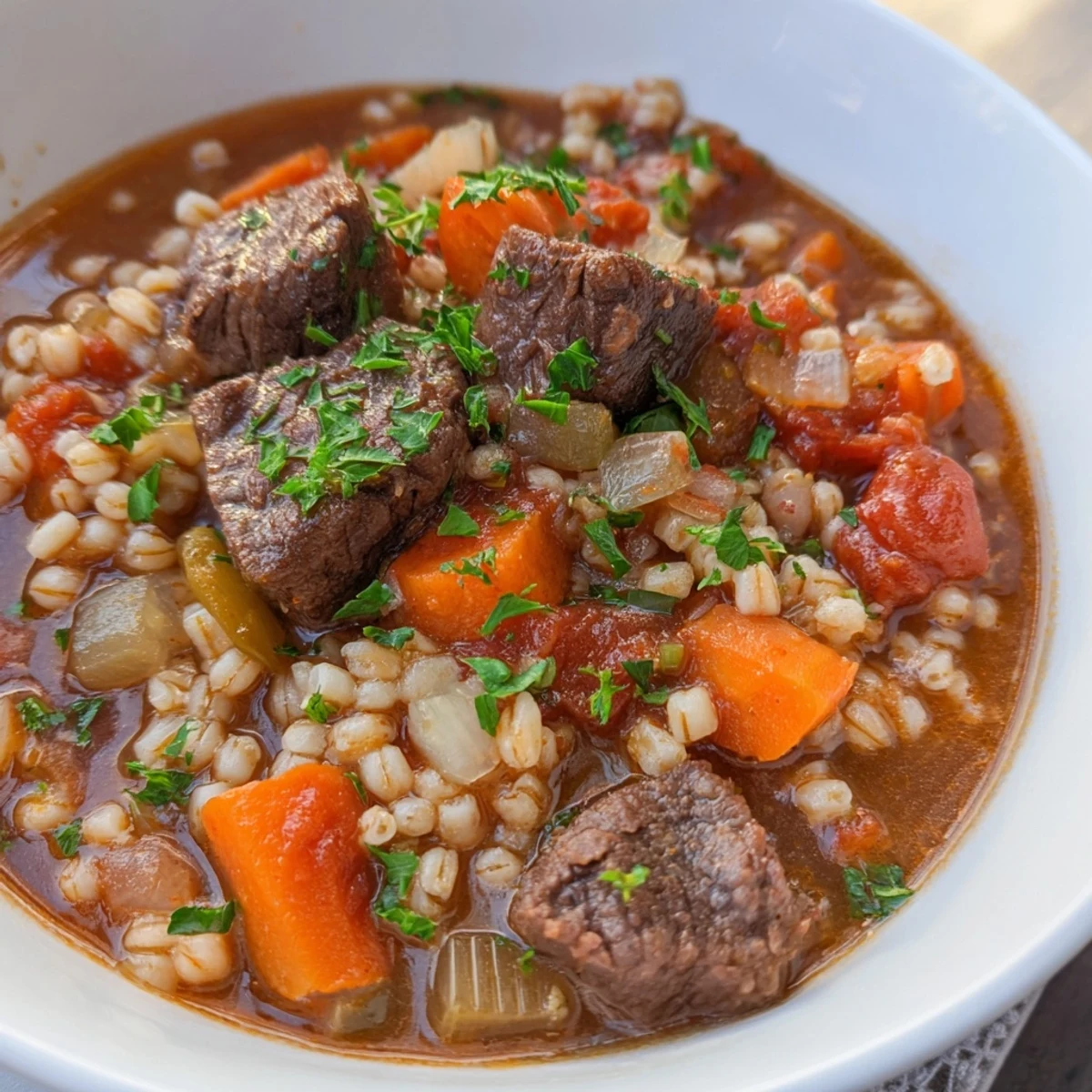
Save There's something grounding about a meal that takes time and fills a whole pot. This stew has a way of slowing down the evening and reminding you why you cook in the first place.
Your Recipe Questions Answered
- → What cut of beef works best for this stew?
-
Beef chuck is ideal due to its marbling and tenderness after slow cooking.
- → Can I substitute pearl barley with other grains?
-
Pearl barley is preferred for its creamy texture, but hulled barley can be used with longer cooking time.
- → How long should the stew simmer?
-
Simmer the stew for 1½ to 2 hours until the beef and barley are tender and flavors meld.
- → What herbs enhance the flavor of this stew?
-
Bay leaves, dried thyme, and rosemary provide a fragrant and earthy aroma to the dish.
- → Can this stew be prepared in advance?
-
Yes, making it a day ahead allows flavors to deepen and improve overnight.
- → Is it possible to add wine for extra richness?
-
Substituting part of the broth with red wine adds depth and complexity to the stew.